3 Steps, 5 Steps, 7 Steps, 9 – Why Online Marketing Lists Blow Your Mind

It’s a fairly common article of faith among online marketing experts that all published lists, or “listicles”, should contain an odd number of items. In fact, this belief is so strong that it has become a “best practice” for them. This begs the question of whether there is a logical or even scientific, reason to justify the use of odd-numbered lists.

2020-03-17 BLOG Image online marketing lists.png

While this may, admittedly, seem to be an obscure point to make, the truth is that a large percentage of business coaches, marketing experts, virtual assistant teams, website developers, and copywriters take this theory as gospel truth. For most of them, the simple experience is all the proof they need; since such lists work best for their clients, they promote the use of them.

Here’s the thing though, since one of the goals of this blog is to offer online marketing tips to interior designers and luxury furnishing retailers, even the most minor points can matter.

Psychology of Odd-Numbered Lists

Does it really matter? Yes!

Turns out, odd numbers are one of three elements that psychologists and web content studies have shown can entice a website visitor to click on a headline and visit an article.

According to an article at Medium.com, there is research that shows that “humans are attracted to content which promises a list of tips or insights on a subject the reader wishes to know more about or one which piques their interest,” while “grouping information in parcels of three or five enables readers to absorb information better.”

Even more confusing is the fact that humans struggle to process lists of more than nine items, and: “Just as odd numbers encourage clicks, even-numbered lists can have the opposite effect as readers will assume that something has been added or omitted to keep the list to a round number of points.” (emphasis added)

Need proof? How about this?

  • Human beings are lazy and lists draw the eye and interest

  • Odd-numbered lists help the brain to better process batches of information

  • Even-numbered lists create doubt and skepticism in your audience

(See what we did there?)

Are human beings naturally skeptical or has the use of the internet made all of us that way? Ultimately, it doesn’t really matter because the proof is in the pudding: odd-numbered lists in blog posts, marketing copy, and even in titles spark interest in your content.

Looking for more online marketing lists and tips, new design trends, new products, and furnishing ideas? Get in touch with TD Fall today.

Selling Design Services and a Commitment to Client Satisfaction

2020-03-10 BLOG Image selling design services.png

As explained in a previous post, we are offering a series on selling design services that we hope will enable you to increase client satisfaction, close more deals, and boost profits. As promised, we would like to reinforce and expand on our three quick sales tips for designers

  • Do NOT offer solutions prematurely – Until you know what your prospects think of as their individual pain points or needs, you do them and yourself a disservice by offering advice before they are ready to receive it.

  • Practice active listening for clues to closing – Far too many salespeople forget to listen. The most successful salespeople will tell you that every client they work with literally tells them how to close the deal, if only they listen actively.

  • It’s all about them – Got invoices to pay; inventory to get rid of; contractors to keep busy so you don’t lose them? So what! This is not about you and all they really want is find someone to hear them before offering any design advice. (They literally want you to shut up and listen to them.)

Since these are the absolute minimum required to successfully sell yourself as an interior designer, we will expand on them below.

Expanded Sales Tips for Interior Designers

Do not jump the gun – Known as “qualifying” among sales pros, asking questions and exchanging information about the wants and needs of your prospect is the first critical step in selling your services. Offering advice and/or suggestions before you know what they want is presumptuous in the extreme and, more often than not, self-defeating.

For example, imagine the response to a designer who walks into a potential client’s home and says something like, “Oh, that piece in the corner just doesn’t work at all. We will need to replace that right away.”

Now imagine what happens if the client were to say, “Oh, you mean that bureau that my grandmother loved and was left to me when she passed after a painful battle with cancer? The piece she begged me to keep as she lay dying?”

Might as well turn around and walk right out the house, huh?

Be the Designer You Would Want to Hire

Be curious, understanding, respectful, and responsive – There is obviously a better approach than the one taken by our designer with foot-in-mouth disease. Instead of jumping the gun on the bureau in question, imagine what might have happened had she said, “Tell me about that piece in the corner; it’s history and place in your life”.

The prospect’s answer would have provided an insightful look into the importance of the piece, as well as a peek at the homeowner’s personality. Doing so would have been a first important step in understanding the prospect and building a relationship – instead of angering them and leaving their home looking for another job.

In other words, since it can be difficult to overcome a prospects biases and preconceived notions, you should avoid going into that first interview with any of your own.

Turn the Law of Unintended Consequences in Your Favor

Offer solutions that benefit them (not you) – We call this “benefits-based selling” because it focuses on results that are advantageous to the client; individually and exclusively. Stated as simply as possible, the key to the long-term success of your design business will be found in a sincere commitment to improving the quality of life of your clients.

Of course, this can make your job a bit more difficult and challenging than if you were able to plug their home into some sort of template that spits out a new design. But, it will ensure more client satisfaction – and referrals. It will also make your work far more fulfilling.

It’s very important to recognize here that by focusing so strongly on your client’s needs, your own will be taken care of as a matter of course. In other words, there is a wonderful reward to a benefits-based sales approach – your business will naturally (and almost unfailingly) grow. (Think of it as the Law of Intended Consequences!)

By now it should be clear that your commitment to building and growing your design business must be mirrored by an equally strong commitment to satisfying the needs of every client you can. Without this, other “secrets” and “tips” for selling design services from the so-called experts will leave you, and your business, wanting.

Looking for more design sales tips, new design trends, new products, and ideas? Get in touch with TD Fall today.

How the Internet Has Made Selling Design Services Harder (Instead of Easier)

The internet can be an invaluable tool for research and acquiring knowledge. It can also be hazardous, a place where consumers can find just enough information to make them dangerous to themselves. This can make an interview with a prospective client difficult in the extreme because it forces you to overcome misconceptions from sources. In short, and in many ways, the internet has made selling design services harder than ever before.

2020-03-03 BLOG Image How the Internet Has Made Selling Design Services Harder (Instead of Easier).png

While it may feel counter-intuitive, experiences teaches that the more choices an individual has the more difficult it is to make a decision. While this is not always true, it is the case often enough that anyone with experience in sales of any kind will agree that they watch out for it.

According to PsychCentral.com, this is a real phenomenon that is known as decision making paralysis. As a quick example, consider your own experiences when shopping online. You will likely begin with a Google search for a new leather jacket, let’s say. You type in “women’s leather jacket” and Google, always eager to help, takes less than a second to offer you – more than 500 MILLION choices!!! (At least that’s what we got.)

Non-plussed (and not a little amazed), you decide to narrow the search a bit by adding the phrase “near me” to your search query. Whew, that helped. Now you only have 1.4 MILLION choices to consider.

Do you begin to see where the “paralyzing paradox” created by too many choices comes from – and how it can impact your design business?

Google Searches May Create Buyer Objections

Of course, this example has little to do with interior design so, what happens when you search for a local designer? Uh oh, we got nearly 6 BILLION returns to our query. Needless to say, there are not 6 billion design businesses in the world but, these results include a plethora of sites that offer advice on how to choose an interior designer, which could lead to even more confusion for the searcher.

So, human nature being what it is, most potential design clients are going to stick to the first page of the search results so they will only have to consider 10-15 choices. Despite this, however, there are still going to be “expert advice sites” that will tell them what to avoid when hiring a designer. This is the type of thing that may lead to objections you’ll be forced to overcome that have little or nothing to do with your business.

Well, now that we have you deathly afraid of buying and selling anything online, we beg the question about how you might overcome the biases your prospects may develop from their “research.”

3 Quick Sales Tips for Designers

Since this is the first in an upcoming series about selling design services, we are going to offer a few quick selling tips that we will expand upon in future posts.

  • Do NOT offer solutions prematurely – Until you know what your prospects think of as their individual pain points or needs, you do them and yourself a disservice by providing advice before they are ready to receive it.

  • Practice active listening for clues to closing – Far too many salespeople forget to listen. The most successful salespeople will tell you that every client they work with literally tells them how to close the deal, if only they listen actively.

  • It’s all about them – Got invoices to pay; inventory to get rid of; contractors to keep busy so you don’t lose them? So what! This is not about you, and all they want is to find someone to hear them before offering any design advice. (They want you to shut up and listen to them.)

So yes, thank you internet for making life more difficult by offering too many choices to all of us! On the other hand, now that you’re aware of the problem, with tips to overcome it, selling design services should become much easier.

Are you looking for more design sales tips, new design trends, new products, and ideas? Get in touch with TD Fall today.

What’s New From Kravet: Is French Blue the Hot New Hue for You?

With Classic Blue as the Pantone Color of the Year for 2020 (see this post), it should come as no surprise that the team at Kravet have been searching for, and have found, innovative variations of the trending hue. Case in point would be French Blue, the not new hue from Roxy Te of Society Social is leading the charge with what’s new from Kravet.

The creative director and founder of the popular furniture company, Roxy tells House Beautiful her new hue is a “fresh, classic color that works with every style.” So it’s only suitable that Roxy Te chose to breathe new life into the iconic Brunschwig & Fils’ pattern Les Touches. Roxy’s custom French Blue colorway of Les Touches is sold at her flagship store in Charlotte, North Carolina, which she developed exclusively with the team at Kravet Inc.

new from Kravet.png

As she explains, “We felt a true French blue was missing in the market, specifically in the print category and turned to a brand [and] designer favorite, Brunschwig & Fils’ Les Touches to collaborate on a signature colorway. [The line] has been a part of our custom upholstery offerings for a few years now and is always a top seller for us, specifically the standard blue! We knew our customers and designer following would respond positively to a custom colorway so we worked closely with Brunschwig & Fils‘ design team to hand-select two blues that would ultimately make up the signature spot.”

new from Les Touches.png

“We believe our reinterpretation of Les Touches in our signature French Blue will garner the same excitement that the millennial pink movement gained in popularity among modern decorators. French Blue not only caters to the traditionalist, but also to Grandmillennials who are putting a fresh spin on traditional decorating.”

new from Brunschwig & Fils.png

“As a modern brand that went digital before going physical, we understood the importance of having a physical place where our customers could not only touch and feel our designs but also experience a physical expression of our brand in real life. We opened our first ever flagship store, Society Social Charlotte, in November of 2019, which features our original furniture designs, a curated collection of gifts, and a beautiful display of our custom Signature Les Touches French Blue.”

If you are looking for more about what’s new from Kravet, the color of the year, interior design trends and marketing tips, and design product ideas, get in touch with TD Fall today.

Researching Interior Design Trends – Take a Peek Outside the Box

When it comes to researching interior design trends, we all have our favorite sources: Houzz, HGTV, Décor Aid, Business of Home, and Forbes.

Wait… Wut? Forbes? The business and finance publishers?

Yep. You see, we think a diverse view of design trends is helpful to the process. After all, being inflexible is not the same as being uncompromising, where thinking too narrowly can detract from a commitment to excellence in your designs.

And so, we offer an eye-opening peek at an alternative source for some of the most interesting of the dozen trends you can expect for 2020.

Forbes.com real estate, décor, and design contributor Amanda Lauren has learned that the overriding trend in design for the next decade will be focused on originality.

“I spoke with several experts, interior and furniture designers,” she writes, “who all emphasized that when it comes to design in the next decade, individuality will be extremely important. Those into crafting, DIY design, or commissioning custom pieces, will likely have lots of projects to take on in the New Year.”

Join the Non-trendy Design Trend

It must be said that tradition notwithstanding, the same old, same old does get really old. The designers Ms. Lauren checked with agree:

“Los Angeles based interior designer Delta Wright says overall anything ‘uber-unique’ will shine in the upcoming decade. ‘[We will see] highly crafted, unusual materials meticulously featured in furnishings and architecture’.”

(photo courtesy of Delta Wright Design)

(photo courtesy of Delta Wright Design)

As she goes on to emphasize, “But to be clear, this is not about having the most unique sofa or one-of-a-kind hand-blown glass bowl, so much as true authenticity. Christiana Coop, who is the co-founder of Hygge & West explains that uniqueness should reflect individuality. ‘People are designing their homes to reflect their personalities and creating spaces that tell their story’.”

Colors Are Back (And ain’t it about time?)

“Neutral [tones] will be replaced by warm colors, saturated hues, and jewel tones, according to Coop. ‘Tiles, cabinetry, and walls all serve as opportunities for more color,’ she says.”

(photo courtesy of High Fashion Home)

(photo courtesy of High Fashion Home)

“Dolley Levan Frearson, who is the co-founder of High Fashion Home, predicts shades of pink (which are a more sophisticated evolution of the millennial pinks we’ve seen in recent years), will be strong in 2020. ‘I also see a lot of soft peachy corals and terra cotta; colors that feel soft yet grounded in earth tones. I also love golden yellow tones in lush fabrics like velvets to buttery, caramel leathers or leather-look,’ she says.”

Orange is the New Back and Black is the New White (for kitchens, anyway)

“If there is one way to describe the interior design trends we will see more of in 2020, it’s anything goes,” predicts Ms. Lauren.

(photo courtesy of Semi Handmade)

(photo courtesy of Semi Handmade)

“While signature the looks of 2019 and the early ‘aughts like accent walls and all-white kitchens won’t be going away entirely, they will certainly evolve in the upcoming years.”

Inspiration from Above

“Wallpapered ceilings are another way contrast can be incorporated into a room.”

(photo courtesy of Hygge & West)

(photo courtesy of Hygge & West)

“There is no better surface for wallpaper [Coop explains] because it won’t get damaged and the large expanse of space makes for a truly dramatic feature of any room. We’ve been seeing wallpapered ceilings in powder rooms and expect to see more in bedrooms and living spaces in the coming year.”

Nature at Its Most Luxurious

“We’ll be seeing more natural materials with a luxurious spin like marble finishes in bathrooms and kitchens and also marble accents such as vases, bowls and candleholders [Coop says]. Linen will also be big, but in beautiful jewel tones, with finished edges that feel more polished than the raw edge boho take we’ve seen in the past.”

(photo courtesy of Jungalow)

(photo courtesy of Jungalow)

“Along the same lines, Justina Blakeney, who is the designer and founder of The Jungalow, foresees old-world materials like plaster and lime wash making a resurgence. ‘We’ll continue to see people look for ways to connect with nature in their homes through houseplants, natural materials like cane, raffia, grasscloths, and raw/rustic woods’.”

While it’s the nature of trends to fade over time (and some not soon enough), it can also be inspiring for local designers to get a sense of what’s happening in the larger marketplace. We hope that such is the case for you.

Looking for more tips on sustainable design trends, designer marketing tips, and product ideas? Get in touch with TD Fall today.

Kravet Responds Bigly to the Pantone Color of the Year 2020

As an interior designer or furnishing supplier, you surely recognize the effect of design trends each new year. Right now, you may be curious to know: What’s the Pantone the year for 2020, and how is Kravet responding to it?

As described at the Kravet website, “A thoughtful color with a calming ambiance, PANTONE 19-4052 Classic Blue is a timeless and enduring blue hue elegant in its simplicity. A reflective blue tone, Classic Blue fosters resilience. In design, versatility is often fundamental… [and] Classic Blue acts as an anchor color for any interior setting as it’s highly adaptable and easily embraced. Looking to cool down the tone of a room, or perhaps add a deep accent color to an otherwise neutral space? Classic Blue can shift the ambiance in many directions.”

pantone color of the year 2020.png

Typical of the world’s largest manufacturer of luxury home furnishings, Kravet has gone all in with Classic Blue. From fabrics to wallpaper and from furniture to accent pieces, anyone who wants to “get the blues” will be able to do so.

Reliable and Calming, Yet Classic and Timeless

“With its calming nature, Classic Blue is reassuring and easily relatable, while also providing a stable and dependable foundation for color mixing. Offering a sense of optimism, PANTONE 19-4052 Classic Blue sets the tone in an interior, serving as a clear canvas from which to build upon.”

classic blue color of the year.png

“We are living in a time that requires trust and faith,” said Leatrice Eiseman, Executive Director of the Pantone Color Institute. “It is that kind of constancy and confidence that is expressed by PANTONE 19-4052 Classic Blue, a solid and dependable blue hue we can always rely on. Classic Blue encourages us to expand our thinking and challenges us to think more deeply.”

“As technology continues to race ahead of the human ability to process it all, Pantone says it is easy to understand why we gravitate to colors that are honest and offers the promise of protection. Non-aggressive and easily relatable, the trusted Classic Blue lends itself to relaxed interaction. Associated with the return of another day, this universal favorite is comfortably embraced.”

As is typical of the leading influencer in luxury home furnishings, Kravet has taken the latest iteration of the color of the year to new heights and breadths, making it available in a variety of hues across their family of brands.

Looking for more on the color of the year, interior design trends and marketing tips, and design product ideas? Get in touch with TD Fall today.

Is It Possible to Install a Truly Sustainable Kitchen Countertop?

It goes without saying that we here at the TD Fall Blog believe the kitchen to be the most popular room in a home (though we’ve said so many times). It is also fairly obvious that we are somewhat skeptical of the trend (fad?) toward sustainability (since human beings tend toward trendy ideas until they get hit in the wallet). Having said these things, however, trends must be recognized and, if possible, capitalized upon. This includes things like sustainable kitchen countertop materials.

A recent article at Houzz.com offers guidance in this category, with 5 Sustainable Kitchen Countertop Materials to Consider. Though largely intended for consumers, author Barbara Milner offers insight into the world of manufacturing countertops with “sustainability and health in mind”.

We’ve chosen to feature two of the more unique types of sustainable countertop manufacturers, with another that we find intriguing.

Sustainable Countertop Manufacturers

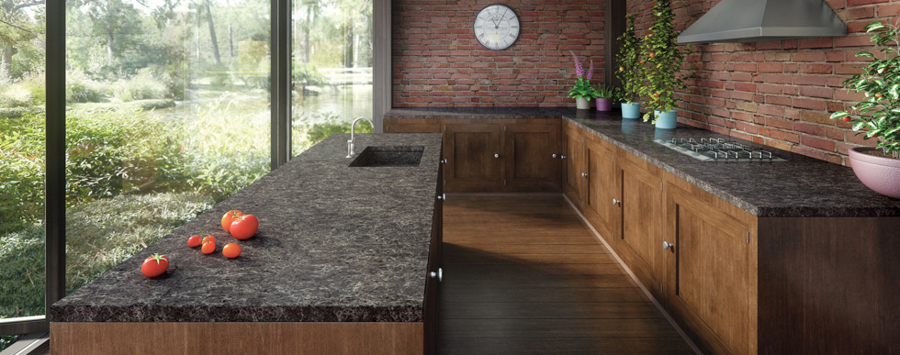
A brand that was not mentioned in the article is Caesarstone. Headquartered in Charlotte, NC, the company manufactures premium quartz surfaces, which are used in both residential and commercial projects as countertops, vanities, wall cladding, floors, and other interior surfaces.

“Caesarstone combines beauty with outstanding performance, enabling you to bring your design imagination to life.”

Coastal Grey Sustainable Kitchen Countertop by Caesarstone

Caesarstone sustainable countertop.png

As they say at their website, “We are consistently trying to improve. Just meeting current industry standards isn’t enough – we’re always trying to exceed them and push our industry to adopt more sustainable practices and better eco-efficiency.”

Perhaps one of the most innovative options in the sustainable countertop category is Richlite paper-based countertops. The product is made from 65% FSC-certified recycled paper and 35% resin, and can withstand heat up to 350 degrees Fahrenheit. It is fire resistant and durable in high-traffic areas.

Richlite will show scratches and patina over time, much like stainless, wood or copper countertops. However, the scratches can be sanded and the material can be resealed to restore its smooth finish.

Richlite Sustainable Paper Countertops

sustainable kitchen countertop.png
Richlite paper countertop.png

From their website: “A cost-effective, long-lasting and earth-friendly alternative to natural or manufactured stone, Richlite countertops bring a warm and natural touch to any interior environment.”

IceStone Recycled Glass Kitchen Countertops

Another interesting line of countertops comes from a Brooklyn-based company named IceStone. Manufactured from recycled glass, as well as nontoxic pigments and Portland cement, IceStone offers a terrazzo look and feel. It works well for kitchen countertops, bathroom vanities, desks and fireplace surrounds.

IceStone glass countertop.png
green countertop solutions.png

From their website: “IceStone began in 2003 with a simple concept; transform waste glass into something beautiful. Every IceStone slab is made in our 55,000-square-foot repurposed facility in the Brooklyn Navy Yard in Brooklyn, New York that dates back to the early 1900’s.”

Whether you believe sustainable design is a passing fad or a solid, lasting trend, being aware of alternatives makes sense to a sharp designer. Being “in the know” about sustainable kitchen countertop products and designs will keep you ahead of your competition.

Looking for more tips on sustainable design trends, designer marketing tips, and product ideas? Get in touch with TD Fall today.

Professional Interior Design Software – Is it worth the cost?

professional interior design software.jpg

In a previous post, we shared some independent reviews of some of the current desktop design software apps you can use. To some extent, these apps are designed for consumers more than professionals, though they all have features that pros can benefit from. In this post, we will offer a glimpse at what might be called professional interior design software products; apps that offer even more features that design pros may want and need.

Needless to say, these programs tend to be more expensive than those we shared before but, they also offer more advanced features and greater versatility. Then again, some are only available for use online, while others can be used as a desktop app – usually at a higher price. The good news is, virtually all of them will offer mobile viewing, which is very handy for showing your design concepts to clients.

Which Pro Design Software is Right for You?

autocad design software.jpg

Perhaps at the top of the Most Popular list is SketchUp. Available at various levels, from personal use to an enterprise version, this high-level software can be used for the 3D design of buildings and exteriors, as well as interior spaces. “The layout of SketchUp Pro ($695) is very intuitive and easy to use, even for the least knowledgeable CAD designers. The 3D Warehouse is a great resource that will provide a generous supply of models and symbols to choose from and work with.” (Ranked “Easiest to Use” at TopTenReviews.com)

Ease of use may be the most attractive feature of the SketchUp software, offering a “simple interface with large icons to help you quickly find and use the tools you need.” Compatible with both Mac and Windows operating systems, there is also a cloud version available.

AutoCAD 2019 receives a “Best Overall” ranking from Top Ten Reviews. Perhaps the best-known CAD software on the market, it is essentially a 2D design tool with a base price of $200 per month (with discounts available for longer subscriptions).

“Like other CAD programs, this one works in layers, allowing you to keep track of your various elements and change them when needed without disturbing the entire design. You can easily add and edit text both in 2D and 3D format… [it] can be viewed and edited on computers, tablets, and smartphones, which makes it easier to share your work with your customers, coworkers, and bosses.”

TurboCAD Deluxe is ranked the “Best Value” among professional interior design software programs reviewed. The product is a ready-to-use, desktop-based, 2D drafting, 3D modeling and rendering software. Easily adjust the interface to access hundreds of drawing, modification, dimensioning and annotation tools.

turbocad design software cost.jpg

“This software costs under $200 and includes unlimited technical support, so you won’t have to pay additional money once it’s purchased. Its 3D rendering capabilities, while not the best, are impressive for the price and can help you make lifelike designs. The toolbars are also customizable so you can rearrange them to make your workflow more efficient.”

While it is not our place to endorse or promote any of these software programs as the “best” for you to use in your interior design business, we hope that the information shared from an outside source is helpful. Then too, more research and asking friends and associates in the industry for their opinions will go a very long way toward helping you decide on the best professional interior design software program for you.

Looking for more interior design tips, design trends, marketing tips, new products, and furnishing ideas? Get in touch with TD Fall today.

Designing Your Design Business – New Year’s Business Detox

business detox.jpg

A new year is traditionally a time for making personal changes, often including a detox to make the body feel better and improve energy levels. Others remove clutter from their houses and/or garages as a way to free up space and clear their minds. Then again, though rarely thought of, a business detox presents opportunities for reducing stress, increasing energy levels, and improving overall health.

What do we mean by a “business detox”?

It’s not about “defining your mission”, “articulating your vision”, or even “setting realistic business goals”. While there is nothing wrong with those (and, in fact, they have great value), a business detox is more like a body detox; an effort to cleanse your business by removing impurities and toxins that may reduce profitability, and could be getting in the way of enjoying your work.

Perform a Business Cleanse

These include the things that make running your design business stressful (and less than enjoyable), such as:

  • Collections – Outstanding invoices are a real drag. Knowing you’ve completed a project but have yet to be paid is stressful and emotionally exhausting. It’s time to get busy on collections by creating a list of anyone who owes you money, contact them and demand payment, then follow through on any payment schedule you agree to. Diligence is the key to getting paid all you're owed.

  • Clean up old debt – Owing money is no more pleasant than being owed so, make a plan and do all you can to pay down your business debt and try to work on a cash basis as much as possible. You’ll be very pleasantly surprised by the sense of freedom you experience from dumping business debt.

  • Flush stale emails – Hate to say it but, that email link to an article you had to read – from five years ago – needs to be deleted. If you haven’t had the time, or the inclination, to take action on emails that are 4-6 months old, you probably never will. So, DELETE. If, on the other hand, you have important communications that need to be saved, schedule some time to set up folders for them, then schedule a time for following up – so you can finally get rid of them! 

  • Fire problematic clients – This may include some of those “slow pay” clients you've put on your old debt list. The old adage “The customer is always right” is not (and never has been) true so, when they are more trouble than they're worth, get rid of them. You would do well to remember though, that some clients are profitable despite the problems they cause and, in the long run, may still be worth the hassle. Schedule some time to detox your client list by cherry-picking the ones who spend enough that you want to keep them; then, go ahead and fire the rest.

  • Dump non-supportive suppliers – Not all suppliers are created equal, and neither are all sub-contractors. Life is too short, and business too demanding, to have to work with companies and people you dislike and who refuse to support you. Make 2020 the year you finally choose to detoxify your supplier list, and while you're at it, get rid of those subs who think they’re doing you a favor by working with you, too.

One last tip to help you detox your business is – delegate tasks that you should not be doing every day. You can easily outsource things like billing, tracking, and even project management. This will give you the time you need to better serve existing clients, acquire new clients, build relationships with suppliers and sub-contractors, and run your design business the way you imagined when you began.

Looking for more tips on designing your design business, how to perform a business detox, new home design trends, designer marketing tips, and product ideas? Get in touch with TD Fall today.

Fall Market 2019 – High Point Market Style Report: Winter/Spring 2020

In a previous post, we shared some highlights from our booth at fall market 2019. While this may have been a bit self-indulgent, it was also fun and, we hope, illuminating to share some of the latest trends from the lines we represent.

However, in an effort to broaden the view of the latest design trends (so to speak), we thought it would be helpful to remind you that the High Point Market 2020 Winter/Spring Style Report has been released.

After all, we share posts on design trends regularly ourselves so, it seems to make sense to occasionally examine what others find interesting. What better way than a report that puts it all in one place for you? (They offer a link to download the report in pdf format.)

From the report: “Texture and statement case good pieces were the talk of the town. Caning on everything from chairs to beds – reinterpreted in ways that made it easy to use in designs outside of a coastal aesthetic – was prevalent in most of the major showrooms. Pieces with fluid and organic forms were spotted for their unique high style, and large-scaled hardware adorned case goods that stopped us in our tracks.

“Bold color and large-scale patterns made a big splash on upholstery. Leopard was trending in both large and mini scales, as well as every color imaginable. Big bold florals are also making a comeback. The Style Spotters all seem to agree that color is again on the uptrend.”

A Focus on Texture Makes a Splash

From fabrics to finishes and upholstery to treatments, the trend for next year is toward textures that add depth and a sense of luxury to even the smallest pieces. This focus on the feel of a space makes even lighting an important and impactful component of the use of texture.

Unexpected Textures

01 fall market 2019.jpg

“Interesting materials used to create unexpected textures was another trend we spotted during Fall High Point Market. Bernhardt hit it out of the park with the introduction of their new outdoor furniture collection. The Wailea Chair was a favorite – the braided frame looked like it could be quite solid from a distance but was soft and luxurious to the touch.” – Courtney McLeod

Artistic Textures

02+2020+design+trends.jpg

“The Fresco Countryside 2 art-piece at Wendover Art Group, by Lilian August was also a show-stopper. The image was soft and beautiful with layers of patina, cracks, and interesting brush techniques. Here again, the piece drew you in.” – Laura Thurman

Lighting that Enhances & Illuminates Textures

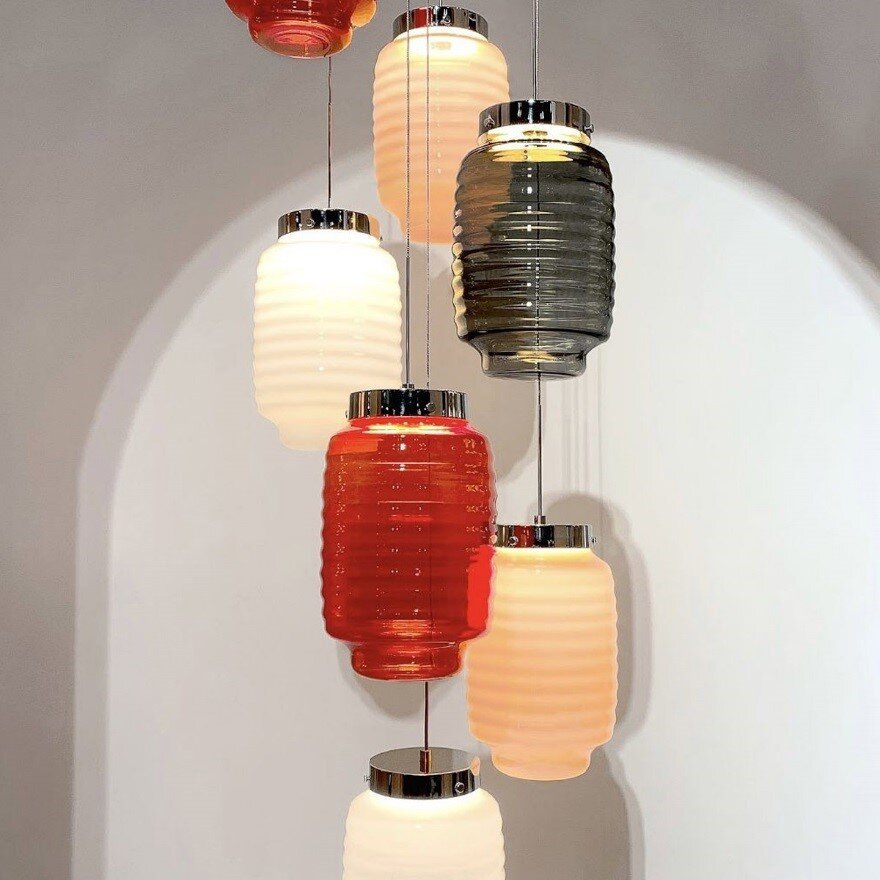
“There was no shortage of fierce illumination at Market. It was by far my most spotted category, and what made me feel the most inspired. The hand blown glass Chinois Pendant Light by Niche at Mill Collective was to die for. It was a perfect representation of global and cultural expression, translated into modern and practical application. The pendant shape is inspired by traditional Chinese lanterns. Color and form played a huge role in all the lighting... [with] special attention to the blending of materials and finishes.” – Laura Thurman

Touchy-Feely Textures Give us the Feels!

04 feel the textures.png

“So many items invited you to move closer and touch them. Be it the slick, smooth surface of the Miranda Kerr Nightstand at Universal Furniture, or the organically shaped Cliff Console Table at Noir, the manipulation of materials and texture piqued my curiosity.

“My favorite, however, were the deliciously soft pillows and quilts by Aloka for Signature Pillows. This was their first Market, and their product did not disappoint. Their items are made from layers and layers of vintage Indian saris that have been over-dyed and block-printed. Because of the material’s life cycle, and Aloka’s unique process, these saris are incredibly soft and durable. Plus, they tell an honest and soulful story.” – Laura Thurman

Of course, this year’s style report from fall market 2019 has a great deal more to offer than a focus on texture and we plan to share more of their 2020 design trend insights in future posts… Stay tuned!

Looking for more new home furnishing collections, news about fall market, the latest interior design trends, marketing tips, and ideas? Get in touch with TD Fall today.