Interior Design Trends – Color Palettes are the Latest Design Trend

Ah, color. When it comes to interior design trends, color may be the most difficult to grasp. Whether you accept the “color of the year” from the many sources available or research color trends from among other designers, it’s never easy to decide a direction for your clients.

On the other hand, there are so many “experts” out there these days; it’s just as hard to ignore the advice they have to offer. After all, manufacturers invest millions in such market trends, which begs the question of whether a local designer should ignore them.

Well, yes… and no.

At a fundamental level, all interior design is local, and national trends mean very little. So, while designers in New York and Los Angeles may influence the decisions made by manufacturers, they will often have no impact on your market. Yet, being “in the know” about design trends will reinforce your reputation and help to boost your brand.

That being said, there is a recent color trend that can help a sharp designer (like you) display knowledge of the marketplace as well as influence your client’s decision on color choices: using a color palette.

Monochrome Colors Seem to be “Out”

As you know, we respect the diversity of information from Houzz.com because they appeal to both consumers and design professionals, giving a more varied perspective on trends, especially. According to a recent article, editors at the latest Maison & Objet trade fair in Paris said they “saw a much subtler use of color, with multiple harmonizing or contrasting hues playing off one another.”

“Trendy and novel colors like burnt orange, olive green, and blood-red were well-represented [at the fair] however, what we really noticed… were the many color palettes. There were very few monochrome booths; many featured subtle color mixes based on analogous harmonies of three to five hues, combining primary and secondary colors, or triadic color contrasts.”

In other words, what was being shared was a series of “harmonious and contrasting combinations” of colors within a space that made a statement on its own.

For example:

Warm Harmonies of Blood Red, Orange, and Mustard

Harmonies of warm and invigorating colors – burgundy, wine red, blood red, burnt orange, mustard, and golden brown – create a look that’s sunny, energetic, and perfect for revitalizing interiors. These are the novel hues for this year.

Cool Combinations of Khaki, Yellow-Green, Linden Green and Almond Green

interior design trends 10-14-19.jpg

Harmonies of warm and invigorating colors – burgundy, wine red, blood red, burnt orange, mustard and golden brown – create a look that’s sunny, energetic and perfect for revitalizing interiors. These are clearly the novel hues for this year.

Cool Combinations of Khaki, Yellow-Green, Linden Green and Almond Green
design color trends.jpg

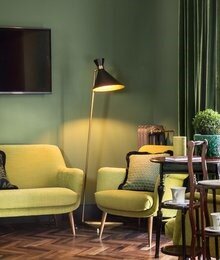
Among the cool spectrum, it’s impossible to ignore this combination of shades of green. Fir green, the big color of 2019, still appears here and there, while the new green on the block is tinged with yellow and tends toward being a warmer khaki-olive.

Sweet Harmonies of Beige, Taupe, Greige, Honey and Fawn

design color ideas.jpg

These colors are timeless classics rather than novelties. However, there’s no better way to spice them up than to combine shades of these colors. Taupe (and onward through the spectrum to brown) has made a big comeback, and there are also mustard yellow, fawn and sienna. These reassuring palettes inspire cuddling up under a blanket.

Delicate Contrast With Blue, Orange and Pink

contrasting color choices.jpg

Among blues, we’re seeing peacock blue, Klein blue and denim step into the limelight. We’ve seen a lot of blue in the past few years, but now blues as a whole seem to be in decline.

Earthy Shades Carry On

earthy color combinations.jpg

Matte, dull and earthy colors remain trendy, manifesting an affirmation of the desire for nature.

The key to this latest interior design trend it seems to us, is to not let any single color overwhelm the space and to think in terms of shades instead of allowing one color to dominate.

Looking for more interior design trends, design business tips, marketing tips, new products, and furnishing ideas? Get in touch with TD Fall today.

Interior Design Tips – Master Bath & Kitchen Add Value to Homes

While the kitchen is the most popular room in the house, it’s just one of two rooms that make a huge difference to the value of a home. According to the real estate website Trulia.com, “The rooms buyers most closely inspect (and judge) in a house are the kitchen and master bath. These are the interior spaces where the most value can be added during a sale, so they need to look their best.”

“A well-appointed kitchen will dramatically increase the value of your home, so it’s worth spicing up yours to grab buyer attention. The same holds true for the bathrooms, especially the master bath. A sparkling master bath with clean lines will charm open-house-goers with modern upgrades like dual vanities and soaking tubs.”

Since we’ve addressed kitchen design in other posts, today we will focus on master bath design tips. According to the design pros at Houzz.com, there are 8 Golden Rules of Bathroom Design that are key to creating a terrific bathroom, no matter its size or style.

We’ve chosen to share what we believe are the top five ideas from among those they offer.

Include Plenty of Storage in Master Bath Design

The clutter of too many toiletries, no matter how attractive, can undo your good work in creating a calm space. Rather than fight the inevitable, accept the reality and embrace great bathroom storage.

master bath storage.jpg

The key is to think through what you need to store and then design appropriately. Some things are best kept in a drawer, some in a mirrored cabinet and others in a cabinet. Consider how the storage solutions will work as part of the whole room.

Focus on the Details

Even bathrooms with the most expensive fixtures can end up looking disjointed if the details aren’t carefully considered.

One example would be a glass shower screen that comes too close to the side of a vanity. This might look fine from one angle, but what do you see of the vanity through the glass? Will dirt get between them and be difficult to remove?

master bath design ideas.jpg

Another pet peeve is tile that stops halfway up a wall, leaving a horizontal ridge that will collect dust. Either tile the whole wall or set the face of the tile flush with the wall above by adding an extra layer of plasterboard above the tile before the skim coat of plaster.

Make Sure the Master Bath Design is Functional

Fundamentally, a bathroom must work. That means it should feel natural to use and be easy to clean, and all essentials must be accessible, well-functioning and suitably lit. Whatever design you adopt, never let style get in the way of function. That said, you shouldn’t have to compromise.

bathroom design ideas.jpg

This bathroom accommodates users of varying heights. Installing sinks and mirrors to suit everyone in the household is both smart and cute. The designers also factored in the sloping ceiling when they put the shower head and adult sink under the highest part and the toilet under the lower part.

Let In Natural Light

Bathrooms often get the space left over after bedrooms take the best spots and windows. But spare a thought for those relaxed and contemplative times spent in the bathroom.

master bath lighting.jpg

Daylight can be the most wonderful magnifier of space and is particularly important in small bathrooms, such as this one by Custom Kitchens by John Wilkins. The most intense daylight comes from above, so installing skylights is often a great way to flood a room with light while saving the walls for fixtures and furniture.

Size Matters in Master Bath Design

A bathroom is often designed to fit into the smallest space possible, and then people still want a tub, separate shower, twin sinks and a toilet. Give your space a break!

small bathroom design tips.jpg

Go for a separate tub and shower only if there’s genuinely enough room; otherwise, combine the two. Remember that the user needs enough room to stand, dry off, and turn around.

Looking for more interior design tips, design trends, marketing tips, new products, and furnishing ideas? Get in touch with TD Fall today.

Interior Design Tips – Kitchen Design & Backsplash Ideas

We really can’t overemphasize the importance of kitchen design in the home. Easily the most popular space in most homes, kitchens are no longer used for preparing meals alone. As explained in an article at FreshHome.com, “They say that the kitchen is the heart of the home. And we have to believe it’s true. Whether small or large, the kitchen is the hub of the home. It is where the meals are created – it fuels the bodies, minds and souls of friends and families all over the world. Some say that while life may be created in the bedroom, it is certainly lived in the kitchen.”

As we begin this series of posts on interior design tips, we plan to focus on a variety of areas of kitchen design that have the most appeal to homeowners. Whether for better use of the space or because it may increase the resale value of the home, there are a few very specific areas of focus that a sharp designer can use to ensure their clients are satisfied.

Like so many things in life, details make a huge difference. One of these is the kitchen backsplash. While it is not usually a high priority for most homeowners, at least at first glance, the backsplash in the kitchen can bring together a new design concept – or ruin it.

Kitchen Design Backsplash Options and Ideas

According to a recent article at HGTV.com, there are a stunning array of options for beautiful kitchen backsplashes, including materials like ceramic tile, stainless steel, glass, and slate.

Open Concept, Modern Kitchen with Marble Backsplash

A large panda white, marble island with waterfall edge centers this modern, open-concept kitchen with walnut cabinetry and vivid glam furnishings.

marble kitchen backsplash.jpg

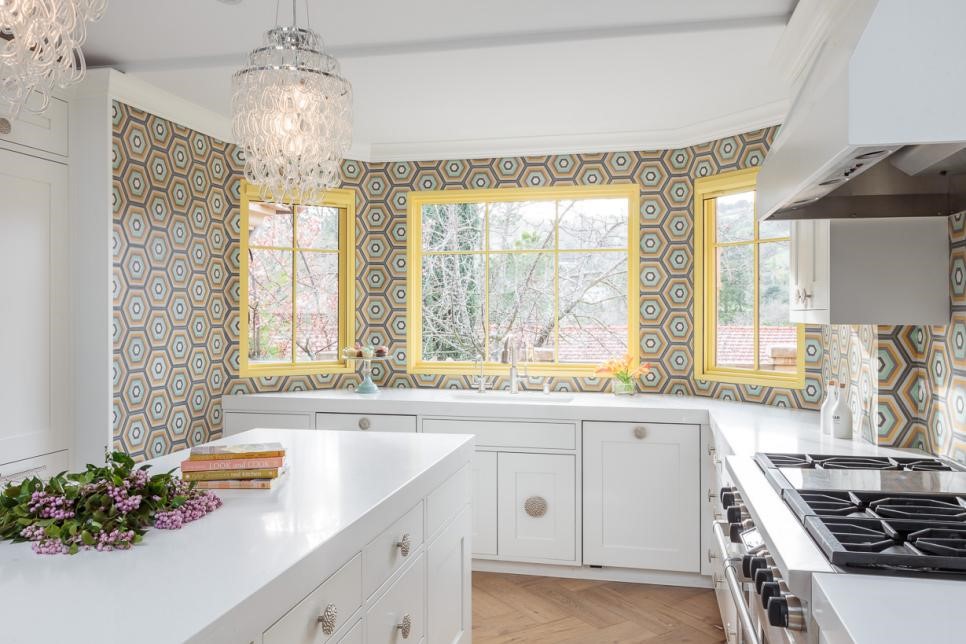
White Contemporary Kitchen With Yellow Trim & Colorful Backsplash

Yellow trim around the windows of this whimsical kitchen gives the room an even sunnier mood. The color also complements the warm-hued wood floor. The colorful encaustic tile backsplash was the starting point for the kitchen's cheery redesign.

kitchen design ideas.jpg

Renovated Kitchen With Natural Stone Backsplash and Wood Range Hood

This light and bright kitchen features white wood cabinets, some French door style, with sleek white countertops and a natural stone backsplash. A wood range hood adds a unique touch.

stone kitchen backsplash.jpg

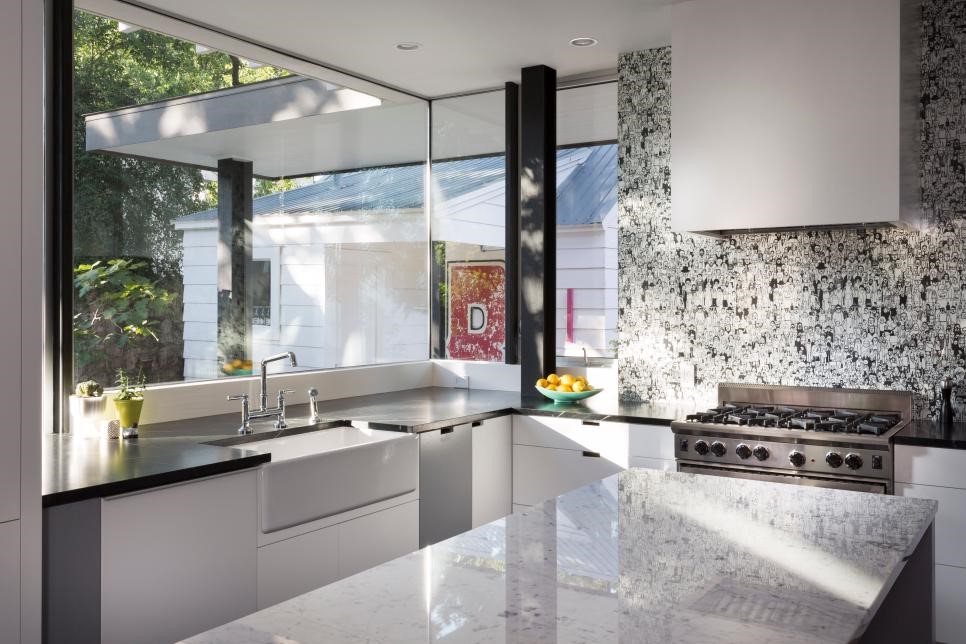
Modern Kitchen with Large Corner Windows & Glass Over Wallpaper Backsplash

This modern kitchen features large corner windows, structural steel columns and a dynamic wallpaper behind a glass backsplash. Marble countertops and a farmhouse sink complete the look.

glass kitchen backsplash.jpg

Contemporary Kitchen With White Cabinets & Brick Backsplash

This contemporary kitchen features white cabinets with plenty of storage, white under mounted kitchen sink with gooseneck faucet, stainless steel range, and rustic brick backsplash.

brick kitchen backsplash.jpg

Whatever kitchen design challenge you may face in the future, if you allow yourself to think outside the box on details like the backsplash, you just may create the perfect kitchen for your clients and their family.

Looking for more interior design tips, design trends, marketing tips, new products, and furnishing ideas? Get in touch with TD Fall today.

Interior Design Trends – Kravet Quick-Ship Furniture Program

interior design trends.jpg

Always innovative and a step ahead of interior design trends, as well as being eager to meet the needs of designers and their clients, Kravet has introduced a “QuickShip” program, based on the Smart Furniture frames and Smart Performance fabrics.

Yes, it seems our constantly connected, instant gratification culture has finally made its way into the design industry. In answer to this need, Kravet furniture has created a process for “quality furniture without the wait”. New this year, TD Fall & Company are pleased to be participating in the Kravet Furniture QuickShip program, featuring a selection of Kravet SMART frames and fabrics – all produced in the good ole USA in just two weeks.

While not exactly overnight delivery, such a quick turnaround time for high-end furniture is unprecedented in the luxury end of the home furnishings industry.

The new furniture program includes sofas, sectionals, sleepers, chairs, and dining chairs; all available with more than 100 fabric options in varying textures that boast durability, cleanability, functionality and, most importantly, quality and style.

This exclusive furniture program from Kravet includes everything you need to design a space. And, it’s easy to use. Simply select your frame, pair your fabric, choose your base and finish, and you are on your way to receiving the personalized piece of furniture you need to make your clients happy. And this can all be done and the order submitted directly on Kravet.com.

Fabrics included in this program feature durable performance qualities that maintain a soft hand, while base and finish options allow you to create the perfect silhouette for any interior. Choose from the wide variety of Performance upholstery fabrics from Kravet’s Smart Crypton and Armour collections.

Looking for more interior design trends, new fabric collections, the latest in home furnishings, marketing tips, and ideas? Get in touch with TD Fall today.

New Fabric Collections from Kravet – Nate Berkus, Studio C, Clark & Clark

new fabric collections.jpg

One would be hard put to find collections that diverge as much as the new fabric collections Kravet is now offering from Nate Berkus, Studio G, and Clark & Clark.

From colors to textures, from solids to patterns, and from embroidery to embossing, these new fabric collections present interior designers and luxury furnishing specialists with multiple opportunities to create unique settings in any home or office environment.

Well-Traveled Fabric Collection by Nate Berkus

In his first fabric collection for Kravet, Nate Berkus wanted to allow freedom for designers to showcase their distinct point of view. Incorporating inspiration from Nate’s many travels abroad, his new Well-Traveled collection offers a fresh perspective that mixes history, architecture, art, and craftsmanship.

new fabrics from Kravet.png

“Travel is always such an important part of anything I design. For this collection, we explored techniques from places such as Mexico and Peru, and also mined museum exhibits and archives for pattern inspiration. I wanted to create the perfect balance of curated pattern, technique and texture.” – Nate Berkus


Well-Traveled presents casual cotton and linen textures with the mix of archival prints to create light and livable rooms with the thoughtful care Berkus brings to every project. We’ll let him share his thoughts on putting together this new fabric collection.

“In the 20-plus years I’ve been doing this, it’s always been about giving people permission to tell their story and to live only with what they love. My hope for this collection is that a certain pattern or colorway will resonate, and will help add another layer to a room… Whether that’s as a set of drapes, a reupholstered sofa or a throw pillow.” – Nate Berkus

Roof Garden Fabric Collection by Studio G

Launched in 2016, Studio G is a second brand from Lee & Emma Clarke and is aimed at the mid sector of the market; lively, fashionable and accessible, appealing to aspirational and fashion aware consumers. In addition, C&C Contract collections are specially produced for the contract and hospitality markets, bringing a fashion-forward look to commercial spaces around the world.

studio g fabrics.png

With a generally light and airy feel, the Roof Garden collection of fabrics remains comfortable and compelling thanks to its outdoorsy sense of playfulness.

With names like cactus, rainfall, stepping stones, and terrace trail, these fabrics are an ode to nature, regardless of the space in which they are used.


Clark & Clark Fabric Collections

Founded in 1999 by Lee & Emma Clarke, Clarke & Clarke has established itself as one of the global leaders in the home furnishings market. The company now distributes products to retailers, manufacturers and interiors designers in over 90 countries and has earned a reputation for providing innovative designs, exceptional quality and excellent value for money.

The company markets its products under two brands; Clarke & Clarke, which is transitional in style, targeting the mid to upper end of the interiors sector and brings inspirational design from the catwalk to the home, and Studio G.


Looking for more new fabric collections, new home furnishings, the latest interior design trends, marketing tips, and ideas? Get in touch with TD Fall today.

Designing Your Design Business – Benefits of Working with a Business Coach

design business tips.jpg

In a recent article titled Coaching pays off for new managers at BDCNetwork.com, the value of hiring a business coach is revealed, at least as it relates to those who find themselves trying to adjust to a new leadership position. Of course, the value of working with a coach also applies to entrepreneurs and small business owners who may be struggling to lead a team and grow their business – perhaps you and your design business.

The article shares a few quick insights gleaned from a white paper published by the folks at the Fails Management Institute, or FMI, an advisory group “for engineering and construction, infrastructure and the built environment and the industry’s leading organizations”.

In their paper, FMI found that:

  • Some 91% of participants said that coaching increased their readiness for a new leadership role

  • Nearly 88% of participants suggested that coaching increased their overall engagement in their roles

  • About 87% of respondents said that executive coaching has a high return on investment

  • And 77% of survey respondents stated that their coaching experience exceeded their expectations

Whether you’re busy trying to establish your design business, working on developing a new product or service, or developing a growth strategy for your existing operation, the experience and expertise you can gather from a coach can be invaluable for both the short-term and long-term health of your business.

Benefits of Working with a Business Coach

When you choose to work with a business coach, the benefits are likely to exceed the cost involved.

  • Experience and Expertise – A business coaches can offer you expert advice and guidance based on actual experiences in the world of business and business start-ups. Most of them have a load of “Been there, done that” experience to offer, with both successes and failures from which they’ve learned the hard lessons you're about to encounter.

  • Fresh Perspective – Having a sounding board for your ideas, from new products or services to the structure of your business and composition of your team, is a great way to work out any kinks in your thought process. For an emerging entrepreneur for example, it’s to be expected that you’ll get caught up with your ideas to the point of questioning, confusion or second guessing yourself. There may also be areas you’ve never considered that an experienced coach will have top-of-mind.

  • Existing Business Network – With experience comes a network of industry connections – business connections you may not have yet. Not only will your coach help to open doors so you can meet important people, he or she will know which doors to knock on, and which to avoid. The value of an introduction to the influencers in your niche, not to mention the thought leaders in your target market, is something you simply cannot put a price on.

  • Different Skill Set – While you have design expertise to offer, there are areas of your business which will present challenges you may not be able to meet, such as: hiring a team, bookkeeping, taxes, contracts, business structure, just to name a few. Business coaches often have areas of advanced skills, so you can further your technical abilities while gathering big-picture insight.

  • Return on Investment –  Selecting a business coach can be tricky in today's world of self-proclaimed on-line “business building experts”. Your goal is to find someone who has done what you want to do, who is willing to show you how they did it, and see a return greater than your investment for their expertise. A truly committed coach has a single goal – to help you succeed in your business.

Working with a business coach offers an opportunity to realize your business vision far more quickly than you might have otherwise.

When you choose to work with a business coach, the wisdom and experience they offer will provide you with an opportunity to streamline and accelerate the business building process. This will enable you to get where you want to go more efficiently and productively, with fewer “Uh oh!” moments and many more “Ah ha!” moments – helping to pave the way to a much smoother path to the success of your design business.

Looking for more tips on designing your design business, new interior design trends, and new product ideas? Get in touch with TD Fall today.
Your Interior Design Portfolio – When Your Client Says “No Photos”

interior design portfolio.jpg

Transparency is critical to the success of your design business website; imagery that displays your talents and highlights who you are. Just as important is your interior design portfolio, with photos you can share with prospective clients in face-to-face meetings – not to mention Pinterest and Instagram.

Then too, the massive popularity of video makes sharing recordings of your design projects on YouTube or Vimeo (or both) a powerful online marketing tool, as well.

But, what can you do if you run into a client who is so concerned about their privacy that they refuse to allow you to share imagery or videos of the work you’ve done for them?

While certainly not the norm, working with clients who refuse to have their space photographed happens often enough that you should be ready well in advance, just in case.

And, of course, even if you’ve never run into such a client, you can almost be certain that the design project you most want to photograph will be the one you can’t. So, here are some tips you can use to make sure your portfolio contains your favorite projects.

Ensuring Your Design Portfolio is Complete

With help from the pros at ArchitecturalDigest.com, we offer some tips on What to Do When Your Clients Don't Want Their Space Photographed:

Your first resort…

  • Include photography in all of your design contracts – The best way to work around a no-photography situation is to avoid it completely. According to a lawyer who works closely with designers, you should include a clause about photographing a space, both before and after the project, in your standard contract. Work closely with your attorney to hammer out the details to ensure you’re getting the rights you need to complete your portfolio.

  • Negotiate image sharing – Even if you have a clause about photography in your contract, the client may strike it out before signing. That’s the time to negotiate. If your original wording didn’t mention anonymity, it’s a great place to start. Offer your client complete privacy, ensuring that no identifying details about the home or its owners will be shared with publications, on your website, or on social channels. Work on finding a middle ground with your client that still allows you to add photographs of your project to your portfolio.

  • Ask to share details of the design only – Say that your client is standing his or her ground during negotiations. The next tactic to try is to give in, just a tiny bit. Instead of trying to convince your client over the course of the project, a better solution may be to focus on the details. Especially when your work is detail oriented and customized for the client, detail photos go a long way. While cropped photos may not work for publication, they can be used in your portfolio.

Your last resort…

  • Work with their real estate broker – If you’ve lost out on negotiations and the client simply won’t budge, it doesn’t mean all hope is lost. If the client decides to sell the home, there’s a very good chance the space will be photographed to attract prospective buyers. In some instances, you can negotiate a deal with the broker to retroactively add those images to your design portfolio.

Interior designers and architects usually need to get their client’s approval to share images of their projects. That’s not always the easiest thing to do, especially if the project is a private residence.

While hearing a resounding “No pictures” from your clients may not happen often, being ready for the possibility will ensure you’re able to present a complete interior design portfolio online and in meetings with prospects.

Looking for more designer marketing tips, new interior design trends, and new product ideas? Get in touch with TD Fall today.

Designing Your Design Business – Value of Client Testimonials and Reviews

Designing Your Design Business – Value of Client Testimonials and Reviews.jpg

We’ve talked quite a bit about the value, and need, of developing a strategic business plan for your design business (here and here). We’ve also offered advice on the importance of creating an online marketing strategy (most recently here). While many of the business building and marketing tips we’ve shared are important, we would be remise if we neglected to mention the incredible value of client testimonials and reviews.

According to an article at Inc.com, 91% of people regularly or occasionally read online reviews, and 84% trust online reviews as much as a personal recommendation. (More of the research to back up this stunning claim can be found here.)

Client Testimonials May Be the Key to Designer Success

The absolute value of client testimonials and reviews really cannot be overstated. The inherently impersonal environment of the internet makes it a place where skepticism runs rampant and where trust may be the greatest commodity you can find. In fact, we’ve known many online shoppers who base their purchases exclusively on the testimonials and reviews they see.

This is why it is so very important that you create and maintain a process that encourages your design clients to leave reviews and/or testimonials, that monitors the reviews they leave, and that deals with and improves any negative reviews you might receive. (Opportunity calling!!!)

Dedicated to offering tips to both homeowners and design professionals, the website Houzz.com recently shared some great tips for just such a client review process:

1. Ask Your Clients for Reviews and Testimonials

  • Make reviews part of your design process – Mention reviews at the start and throughout the project so clients keep reviews top of mind. Planting the seed from the beginning will make it easier to get reviews at the end of the project.

  • Personalize your client requests – Requesting reviews with a personalized note is much more effective than sending a generic message. Ask how they’re enjoying a specific feature you worked on or how they’re decorating for the holidays.

  • Tap your professional designer network – On Houzz, members of the professional community can fill out reviews as “Colleagues” to provide a different angle of your business. Only request reviews from other professionals with whom you have worked.

2. Track Your Projects and Client Testimonials

  • Keep a project tracking spreadsheet – Keep an Excel or Google doc of all the projects you finish. At the end of every month, send requests to all the clients who haven’t reviewed you yet. Once you receive a review, mark it in the doc.

  • Request reviews with Houzz – With the “Get Reviews” tool on your Houzz profile, just add the client’s email address and write a personalized note. Houzz will send the client an invitation to review your work.

  • Ask your account manager to follow up for you – Pro+ pros can have their dedicated Houzz account manager assist with reviews. Ask your account manager about the Review Concierge Service that can send requests via email on your behalf.

3. Follow Up with Every Client, Review or Not

  • Thank your clients for thanking you – Since responding by email can be time consuming, Houzz allows you to respond to your reviews with a thank-you message and a “Like.” Responding to reviews shows that you truly value relationships with your clients, even after the project is complete.

  • Respond to negative reviews – Offering clarification or perhaps how you might improve the situation will allow potential clients to see how you handle situations that aren’t ideal. A negative review can be a positive marketing opportunity. (More on this below.)

  • Make client testimonials available online – Make the reviews you receive available to prospective clients to showcase your credibility and experience as a real interior design professional. Send clients a link to your reviews page, add them to your website with the Houzz Review Widget, and include them in any prospective client welcome materials.

BONUS TIP: Remember that repeat clients are more likely to hire you again – and to spend more – than a new client so, keep in touch with clients after you finish a design project by asking for a testimonial, and by asking of they may need more work in the future.

Turn a Bad Review Into and Opportunity

Here is some great advice from the Inc.com article we mentioned above: If you receive a negative review, the first thing to do is…

“Make the customer feel [like they are being] heard. Jump too quickly to trying to solve the problem and some will think you didn't take the time to fully understand the problem – and how it made the customer feel. Listen, ask questions, and then validate the customer's feelings. Say, for example, ‘It must have been frustrating for you to not be able to…’

“Then, focus on solving the problem, confident that you not only understand the problem, but what the customer really needs. Once the customer is happy… politely ask them to edit their rating.

“Most will do so. After all, customers don't want to leave negative reviews. They want to be happy.”

Since interior design is a largely local business, and because online reviews have become on of the most important local ranking factors with search engines, creating a process for client testimonials and reviews is absolutely a key to the growth of your design business.

Looking for more design business tips, new interior design trends, and new product ideas? Get in touch with TD Fall today.
Interior Design Trends – Stylish Sustainable Design Solutions That Work

In a previous post we asked the question, Is sustainability a sustainable design choice? While we expressed some skepticism at the time, sustainable solutions remain a huge interior design trend. So, how can you approach this particular niche in your own market?

In a recent article at BusinessOfHome.com, editor at large Robyn Smith presents 19 brands that turn trash into treasure as proof that sustainable design is not only possible but, with a bit of creativity, can also be stylish.

As she enthusiastically assures us, “Upcycling isn’t just for Pinterest crafters anymore. We found 19 home brands that transform previously used materials – think tires, engine coils, fishing nets, and chalkboards – to construct new, beautiful objects for the home.”

Sustainable Home Furnishings

Is it really possible to create quality home furnishings from recycled trash?

Lovesac – Claiming to be builders of “The World’s Most Adaptable Couch™”, this modular Sactional sofa has upholstery that is made from recycled plastic bottles and cushions that are filled with shredded scrap foam from the sofa industry.

Lovesac.jpg


Ethnicraft – Specializing in “creating authentic, contemporary and timeless furniture from solid wood”, this piece offers shapes that adorn the Graphic sideboard’s doors that are composed of leftover wood scrap from the company’s factory, which would otherwise be too small for furniture.

Ethnicraft.jpg

Groundwork Home – Repurposed surfaces are standard fare for the Philadelphia-based custom furniture manufacturer, which counts old paving stones, school chalkboards, marble shower stall dividers, and factory machine bases among the materials it upcycles for its hand-crafted, hand-finished furniture.

Groundwork Home.jpg

Meso Goods – This “ethically crafted” furnishings brand uses organic Guatemalan wool sourced in Quetzaltenango for its area rugs, wall hangings, and furniture; it also recycles post-consumer bottles into glassware.

Meso Goods.jpg

Slash Objects – The line integrates the use of an industrial material made of post-consumer recycled rubber to create innovative objects and furniture. Here, recycled tire rubber and salvaged marble from across the U.S. are combined to create the Coexist standing mirror.

Slash Objects-sm.jpg

For a sharp interior designer, home furnishings from companies like these present an opportunity to integrate sustainable home furnishings into your projects for clients who are truly committed to finding sustainable interior design solutions.

Looking for more tips on interior design trends, designer marketing tips, and product ideas? Get in touch with TD Fall today.