Trendy Design Trends That Keep Trending

Design trends come and go (be the definition of the word “trend”, of course), and yet some of them simply rotate from more popular to less – and then back. While we often look at trending colors, fabrics, wall coverings, and furnishings (and will again), perhaps the most exciting en vogue development right now is the news that Confidence in the Home Remodeling Market Returns, per Houzz.com.

According to the author and Houzz editorial staffer Erin Carlyle, “Firms in the residential remodeling industry have regained confidence in the market for the next three months, new data from [the Q3 Houzz Renovation Barometer] show, as nearly all business indicators have returned to pre-pandemic levels.”

This is good news indeed for those of us in the luxury furnishings and interior design business. This news is very encouraging, for, as the article goes on to explain: “Expectations for new business inquiries and committed projects have completely rebounded, following a sudden decline when the pandemic was declared,” says Marine Sargsyan, Houzz senior economist.

While there have been forced changes in the way firms are working with clients, with social distancing still required in most areas of the country, creative solutions are being found. For example, “Construction businesses implemented new safety guidelines, used video consultation tools, and sourced more products online. Architecture and design firms offered video consultations, provided remote collaboration tools, sourced more products online, and implemented safety guidelines at the office and on worksites.”

Below is a graph that shows just how optimistic firms are for the upcoming quarter: “A score higher than 50 indicates that more firms reported increases than decreases in their business expectations.”

Ted Fall Activity.png

Color Trends: Brown is Back & Jewel Tones Sparkle!

Also from Houzz, we are able to take a deeper look into the home design trends that are trending currently. While this article offers 6 Home Design Trends on the Rise, we will combine a few of them – in an effort to save space and your time. (After all, you have to be ready for that bump in remodeling projects that’s on the way, right?)

“The trend that came up the most among designers and builders was the resurgence of shades of brown. ‘Brown seems to be making a comeback,’ says designer Raychel Wade.”

From terra-cotta wallpaper to rusty ochre fabrics to mushroom, the trend is for shades of brown that don’t overwhelm but, rather, accent a space.

“But there’s a lot of variation in the color of brown and its uses throughout a home. Taupes, beiges, sands – basically any earth tone seems to be gaining popularity. ‘I believe that there’s a trend back toward browns and beiges,’ designer Kelly Nelson says. ‘Lord knows people still love gray, but I think there’s been a shift toward grays with brown undertones – greiges if you will – that doesn’t feel sterile or industrial and which work well with both grays and browns. I, for one, am happy to welcome the browns back’.”

Rachel Wade Orange Headboard.png

(Raychel Wade rusty ochre headboard)

“No one is saying white is going anywhere anytime soon, especially when it comes to kitchen cabinet color,” writes author Mitchell Parker. “But many design and building professionals report an uptick in requests from clients for something much darker, especially dark jewel tones.”

Rich and deep seems to be the trend here, with subtlety nowhere to be seen.

For example, “Burgundy on the upholstered chairs in this North Carolina living room by designer Brooke Cole punches up the space. ‘The design industry as a whole is moving away from neutrals and introducing more and more color,’ Cole says. ‘This room is a great example of living colorfully’.”

design trends.jpg

Then too, this deep, delicious blue on the lower cabinets contrasts wonderfully with the pure white tones of the upper. (Proving that white has not gone the way of the Dodo!)

The article goes on to explain the trends toward lighter woods, handmade tiles, and the increasing use of natural materials. Whether kitchens or bathrooms, many of these trends are focused on the most used spaces in today’s homes.

So, there we have some of the most trendy design trends that are trending currently. We hope you’ve enjoyed this quick tour of our industry and expectations for Q3 2020.

We remain open for business and will continue to share the design trends we believe will benefit you most as either an interior designer or furnishings retailer. Click here to… Get in touch with TD Fall today.

We are taking all precautions to safely meet with you in person including disinfecting samples with a CDC approved Crypton Disinfectant, wearing a mask during presentations and limiting meeting times or if you prefer, we can meet virtually too. Let's beat Covid-19 together. Call, email, or text me for availability.
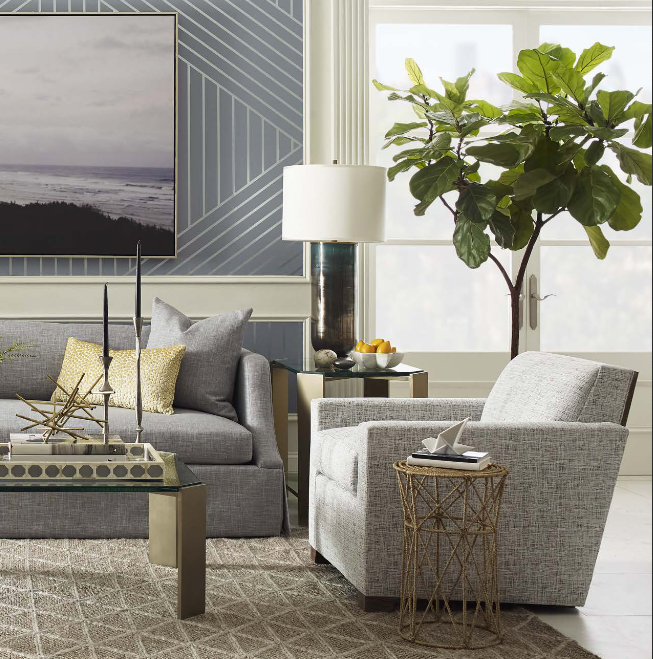
ICreate Custom Furnishings Program from Kravet

The ICreate Custom Furnishings Program from Kravet enables increased creativity for all interior designers, and their clients.

ICreate custom furnishings.jpg

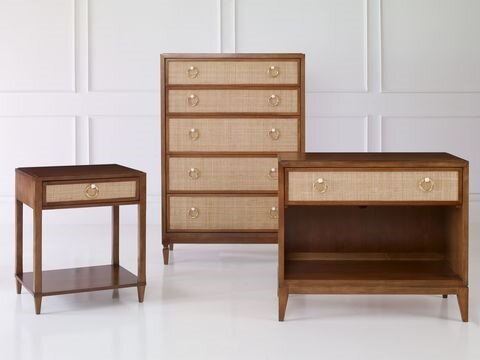
As an interior designer, your job is to be as creative as possible, within the constraints of your client’s budget, needs, and space. Yet, you’re often restricted by other factors – such as the features and specifications of the furnishings available. In other words, while a manufacturer may offer a variety of designs and styles of a chest of drawers, you are usually required to take them as is, with few (or no) options beyond color or hardware.

Wouldn’t you love it if you could pick and choose from a wider variety of features, such as: faces, bases, finishes, and hardware (including placement)?

With the ICreate program from Kravet, you can. And, you can customize each piece using 360-degree visualization and augmented-reality technology to help you realize your vision. With ICreate, you are able to “choose [your] desired finish, fabric, size, and other features, all while generating virtual renderings that will show [you] how the customized furniture will look in the spaces [you] are ultimately designing.” (ElleDecor.com)

A Custom Design Tool Offers Greater Creativity & Choice

custom designed furnishings from Kravet.jpg

Gone are the restrictions caused by the need to control inventory and reduce production costs and lead times. Gone are the narrowly focused presentations that restrain the innovative use of space. Gone is the possibility that the customized look and feel you promised your clients might be duplicated in another’s home (or office).

“This program offers a designer the creativity and freedom to do what they do best—design!” says Sara Kravet, the vice president of furniture at the company.

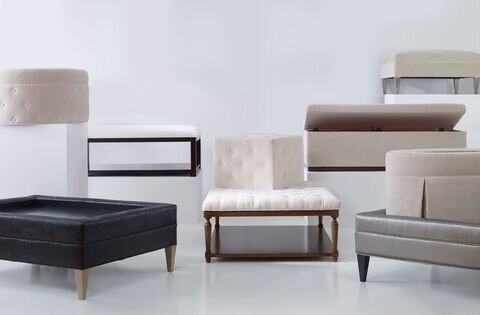
Instead, you can choose different top, trim, and base treatments for ottoman customization, in addition to optional decorative elements like tufting, inset trays, or carved legs as your vision to satisfy the needs of your clients dictate.

“These tool sets take the guesswork out of custom furniture and allow the designer to enhance their client presentation,” says Jesse Lazarus, Kravet’s chief innovation officer.

Originally scheduled to launch during the Spring 2020 High Point Market, which was canceled due to the pandemic, the tool will offer customization options for chests, tables, ottomans, benches, beds, and upholstery. There will also be additional special features at designers’ disposal within each selected furniture category, such as nail head trim for a headboard or tufting for an ottoman. Once a given design is complete, the designer will receive a price quote on the spot.

Always ready to take the lead in innovation and design, Kravet’s ICreate Custom Furnishings Program is using the latest visualization technology to help you reach the next level of creativity and service to your clients.

We remain open for business and ready to support you in any way we can. We will continue to share the design trends, like ICreate from Kravet, that we believe will benefit you most as either an interior designer or furnishings retailer. Click here to… Get in touch with TD Fall today.

Pre-Pandemic Design Trends Continue to Flourish (In spite of it all!)

design trends.png

In case you haven’t noticed, things are changing in the interior design and luxury furnishings industries; just as they are in the rest of the world. While we’ve all experienced lockdowns, social distancing, and virtual meetings and encounters, pre-pandemic design trends have only grown stronger.

Speculation on why (perhaps folks had more time to figure stuff out better?) doesn’t really matter, though. No, what matters is that you know what the latest trends are and that you take advantage of when and where possible.

If you recall, the beginning of the year was an optimistic time. While the stunning Classic Blue was named the Pantone Color of the Year and, as we mentioned, Kravet was “all in” too, making it available in a variety of hues across their family of products. Beyond these, we recognized the potential viability of sustainable materials and offered some hot kitchen design trends we expected to see this year.

But then… Boom! We all got virused and most business ground to a halt. (Downer, much?)

Interior Design Trends from Kravet

new fabrics from Kravet.png

And yet, it’s great to realize that not everyone was intimidated or went stagnant. As usual, Kravet is leading the way by jumping in with both feet and making it easier than ever for you to create the looks and feel your design clients are searching for.

From fabrics to furniture and from wallcoverings to trimmings, the recognized Leader is leading the way out of the valley of doom into which many of us feel like we’ve descended.

Modern Luxe Izu Collection from Kravet Fabrics

Modern Luxe Izu Collection.png

Have we already used the word “stunning”? Can it be used too often? Not when you see this line of couture fabrics! As described in their catalog:

“The [Modern Luxe Izu] collection of exclusively designed fabrics showcases the beauty of ancient Japanese art and time-honored traditional dyeing techniques. Drawing inspiration from art, culture, landscapes, and nature, Modern Luxe Izu is a dynamic assemblage of bold color, dramatic pattern, and sophisticated textures and qualities. Each of these beautiful fabrics captures the essence of decorative design with a refined balance between luxurious construction and natural elements.”

The line offers dramatic patterns coupled with sophisticated texture and quality, as well as striking colors that pay homage to time-honored Japanese Shibori dying techniques.

Click here to see more of the Modern Luxe Izu Collection from Kravet

Mabley Handler Luxury Furniture from Kravet

Mabley Handler Luxury Furniture.png

The Mabley Handler Kravet Furniture collection offers 35 designs that celebrate the fresh, relaxing, and beach-chic style that the acclaimed husband and wife interior design team are best known for. Comprised of upholstery, case goods, and occasional furniture, the collection captures the essence of stylish living through laidback luxury.

With almost endless customization options, each piece in the Mabley Handler collection has the opportunity to become uniquely beautiful with tailored designs that span from the coast to the city. Designers can choose from seven specially-crafted quarter sawn and cerused oak finishes in a variety of tones from pale shell to deep midnight, providing a range of natural and organic looks. The collection’s grasscloth wallpaper, available in either a matte or light sheen finish, can be used to outfit bar tables, mirrors, cabinets, and drawers in a variety of hues to complete the layered look.

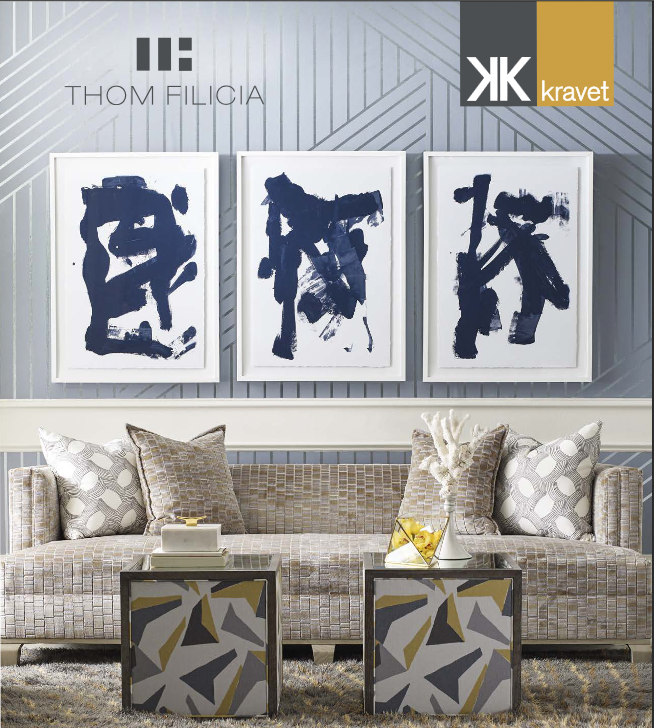
Thom Filicia Fabrics & Furniture from Kravet

Thom Filicia’s new collection for Kravet takes a fresh approach to interior design, creating fabrics and furniture for how we live today. The collection has a relaxed, yet refined point of view, inspired by a sense of light and optimism. Filicia’s collection includes silhouettes that are both timeless and classic, exuding a sense of modern sophistication while feeling effortlessly livable.

The fabric collection, ALTITUDE, features printed linens, geometric velvets, and stylish embroideries, all in keeping with Filicia’s signature aesthetic. A blend of classic forms with unique textures, patterns, and colors create Filicia’s distinct perspective: chic design that’s both accessible and exceptional.

With the year we’re having so far, it might be natural to assume that everyone has reverted to some kind of holding pattern, waiting to see what happens next. That is simply not the way Kravet has chosen to approach the challenges placed before them. Nor have we, at TD Fall.

We remain open for business and will continue to share the design trends we believe will benefit you most as either an interior designer or furnishings retailer. Click here to… Get in touch with TD Fall today.

Is Social Media Marketing Worth It? (Or is it just another money pit?)

2020-07-14 IMAGE social media marketing.jpg

If social media marketing works so well, wouldn’t everyone be doing it? One would think so. Then again, many of the “experts” touting it as the ultimate solution to your marketing dilemma just happen to sell their support as a service. So, what’s the real deal with marketing on social platforms?

As with so many things in life, the truth lies somewhere in between “it’s a waste of time and money” and “your design business won’t survive without it”.

Here are a few truths about social media marketing that you need to accept:

  • Social media marketing has limitations, based on the nature of your business

  • Facebook is a great Business-to-Consumer platform

  • LinkedIn is a great Business-to-Business platform

  • Neither is the perfect platform for both

  • YouTube and Instagram are great video marketing tools (by design)

  • Pinterest is “Meh” for marketing

  • Tweeting is for birds, not business

Also, while a platform with a billion or more subscribers can increase your reach, there is a ton of competition. Long and short of it – don’t expect overnight success with your social media marketing strategy.

Even more important to remember is that interior design is a local business and worldwide reach will mean little to a designer in Boise (for example).

OK… we have now destroyed the almost ubiquitous belief that your business will inevitably die without a heavy focus on social media. But hey, that sets us free to explore when, if, and where you should use it.

When is Social Media a Good Marketing Strategy?

There is a very popular saying in sports commentary that goes like this: the biggest ability is availability. Along the same lines: social media makes you available to your audience, while also making them accessible to you.

Availability and accessibility both have real value in the world of online marketing and, while there are limits, social media networks provide both of them in spades – potentially!

What do we mean by this? Based on statistics from Review42.com, the average time spent on social media was 142 minutes per day in 2018, and young people from 16-24 spend 3 hours a day on various social networks.

There simply is NO other marketing strategy that allows that kind of accessibility combined with such availability, enabling you to:

  • Build brand awareness

  • Increase engagement

  • Target your audience

  • Generate leads

  • Enhance your reputation as an expert

Even your designer website can’t offer you so much access to such a vast audience. (Although, one of the goals of your social media campaign should be to ask folks to visit your website “To Learn More!” or “Get Your FREE Gift!”.)

Choosing Your Social Media Platform

Of course, the ultimate question for you is, where should you focus your time, energy, and money in a social marketing campaign? Well, below are some insights that may help:

Ultimately, it’s true that marketing on social media can be a money pit for some but, for others, choosing the right platform can make it a powerful tool for marketing your design or furnishings business.

However, you must always remember that the makeup of your target audience must determine how you develop and where you use a social media marketing strategy.

Are you looking for more social media marketing tips, more design business tips, and trends, or business consulting? If so… Get in touch with TD Fall today.

How to Attract Luxury Clients for Interior Design Projects

how to attract luxury clients.png

In our recent post on why you should want to attract luxury design project clients, our goal was to whet your appetite for seeking high-budget projects. Today we hope to offer tips for doing so; taking you to the next step with a sort of roadmap on how to attract luxury clients for design projects.

To help us with this task, we again refer to a recent article in the “For Pros” section at Houzz.com. The author of the article, Erin Carlyle, drew from information shared by Designer Wendy Glaister and Liza Hausman, vice president of Industry Marketing at Houzz, when they led a continuing education course for pros on just that earlier this year. This took place before the pandemic struck but, in the face of the economic turmoil that resulted, the information may be even more relevant now.

Stated simply, we believe recovering from the slow down of the economy caused by lockdowns and stay-at-home orders could be easier if you can appeal to this segment of your market. With this in mind, we offer the four tips for attracting luxury clients outlined in the article.

4 Tips for Attracting Luxury Design Clients

1. You’re only as good as your last photographed job. When potential clients are scanning your work on your business website, photos really matter. “This is a really competitive industry. If you have lackluster photos of a $100,000 kitchen, it’ll make it look like a $10,000 kitchen and that won’t get you anywhere in the luxury market,” Glaister said.

Because photos are so important, Glaister recommends specifying in your contract with a client that the project will be photographed – no opting out.

2. Luxury clients are buying you as part of the whole package. Glaister, whose demeanor is upbeat and frequently smiling, told a story about changing her profile photo on Houzz and Facebook. In the new photo, she was unsmiling and styled like a sleek, serious, accomplished designer – a photo of herself she quite liked.

But the reaction from her followers was swift and overwhelmingly negative. “People watch you a lot closer than you think,” Glaister said. She switched her photo back to a smiling one. Her anecdote is a good reminder that in the internet age your online presence … must reflect your professionalism and personal brand. Glaister’s brand was smiling, and followers didn’t like it when she veered from that.

Glaister takes care to use correct grammar and spelling in her online communications and to present a professional and wholesome image. “There are designers who are photographed with many cocktails during the week,” Glaister said. “Great for them. I have found to get a half-a-million [dollar] reno … that does not work.”

Houzz’s Hausman concurred. “You’re crafting a public image for yourself that’s going to bring in this clientele. You can be true to your personality and style, and this doesn’t mean you can’t be more whimsical. Clients want to know that you are a confident professional who is still creative and fun.”

Treat Luxury Clients Like the Special People They Are to You.

3. Just good enough isn’t good enough for luxury clients. Everything for luxury clients – from cabinets to tile layout to electrical installation – needs to be customized and special. Just standard or just OK isn’t going to cut it at this end of the market, Glaister said. You will also need to provide high touch service.

High-end clients may have especially strong opinions, and they may also like to shop. With budget not a major constraint, they may be more likely than lower-end clients to purchase items for the project that may or may not work with the design. Some luxury clients may also want to comparison shop the products that you’re proposing. If they come up with cheaper alternatives, you may need to let them purchase products themselves. “Be ready to let go of some markups and some spaces,” Glaister said.

All this adds up to the fact that with a luxury project, though you probably will be able to make something beautiful and unique, as a designer you may not feel like you have a blank check and carte blanche to execute your vision.

Often, clients in the luxury realm have gotten there because they’ve been smart about their money, Hausman points out. They may want to be relatively involved in the project to make sure they’re getting not only a beautiful result but also a good value. (Remember our post about value as your purpose in the aftermath of C-19?)

4. Details help create that luxury experience. In addition to creating personalized, custom projects for luxury clients, Glaister stressed the importance of paying attention to service details that make the experience of working with you feel luxe.

For instance, Modesto, California-based Glaister takes her clients in a limo to San Francisco twice a year. They have mimosas and treats and fruit. They see the San Francisco Decorator Showcase house or visit the latest exhibit at the de Young Museum or the Legion of Honor museum with a private docent. They go out to dinner in San Francisco and then head home with a bottle of wine and a box of chocolate. The clients love it.

Those twice-annual trips are a significant marketing expense and experience, but Glaister also keeps the luxury feel going in smaller ways. Everyone who hires her gets a handwritten thank-you note on embossed stationery after they decide to work with her.

For her project presentations, Glaister places samples of the selected tile, fabric, and furniture tear sheets in a beautiful box with a big bow. It’s fun for clients to open, and it’s a tax-deductible marketing expense.

On demo day and photoshoot day, Glaister always brings along white orchids. These little touches “elevate the brand” and help shape client experience in a positive way, she said.

We realize, of course, that all of these ideas sound good – in theory. In practice, some will likely be too costly for a smaller design house but, you can let the market determine that. Remember what we always preach, that all interior design is local and your area may be less expensive than the California Bay Area, for example.

If you're still struggling to figure out how to attract luxury clients in your marketplace, Ted’s business consulting services may be exactly what you need. He’s worked in the luxury furnishings and design industry from New York to Utah and has more than 25 years’ experience helping designers grow their business.

Curious if he can help you? Get in touch with TD Fall today.

Why You Should Want to Attract Luxury Clients for Interior Design Projects

Attracting design clients who are willing to spend in the upper five to six figure range doesn’t happen every day. (Attracting those who are able to is even more rare!) However, landing one or two of these design projects can make your year. In an abnormal year like the one we’re experiencing now, being able to attract luxury clients can save your business.

A recent article in the “For Pros” section at Houzz.com got us thinking about this subject. It also made us realize how working with clients who spend more than the average on a remodel could help so many designers recover more quickly from the economic turmoil that has been 2020 so far.

2020-06-30 IMAGE attract luxury clients 2.jpg

Value of Luxury Bathroom Remodel Projects

First, it makes sense to define some terms. According to HomeAdvisor.com, the national average for a bathroom remodel costs $10,500. In the Houzz article though, we discover an entirely different level of spending among the upper echelons in various markets. For example:

“At the top 5% of the market, homeowners remodeling bathrooms in Chicago spent $40,000 on their projects. Those at the top 0.5% of the Chicago market spent about 11 times that, at $450,000. In Los Angeles, homeowners at the top 5% spent $50,000, while those at the top 0.5% spent six times as much, or $300,000.”

If you could attract luxury clients who are willing to spend four to five times the national average for a bathroom remodel, we’re pretty sure it would go a long way toward recovering from the pandemic lockdowns.

2020-06-30 IMAGE attract luxury clients.jpg

Value of Luxury Kitchen Remodel Projects

As the most used and popular room in the majority of homes, shooting for the top end of the budget spectrum in kitchen remodels makes even more sense.

Once again, HomeAdvisor.com gives us a place to start, telling us that the national average for a kitchen remodel is about $25,000. The pros at Houzz however, want us to know that a luxury kitchen remodel will be worth considerably more to your design business. For example:

“For kitchens, homeowners remodeling in Houston spent $90,000 at the top 5% of the market and about four times that, or $370,000, at the top 0.5%. Houston had the highest top 0.5% spend level of any city. Homeowners in San Francisco spent $157,000 at the top 5% of the market and nearly twice that, $350,000, at the top 0.5%.”

These numbers are stunning when you consider they range from about four times the national average to fourteen times what the average homeowner spends on a kitchen remodel.

Know What Luxury Clients Are Looking For

Finally, the author wants us to know that a big-budget alone does not define a luxury design project or remodel.

“In addition to spending a lot on their projects, luxury clients tend to have higher expectations for the work as well as the experience they get during the process. [Contributing designer Wendy] Glaister explained that luxury clients:

  • Expect a project that is completely customized

  • Want projects tailored to their specific needs and aesthetic

  • Expect an enhanced client experience

‘Luxury doesn’t mean movie star,’ Glaister said. ‘Luxury means custom. A lot of us are in the luxury market more than we might think’,” author Erin Carlyle explains.

The concept of “custom” also implies excellent value. This ties in remarkably well with the recent post we shared about making value the purpose of your business. (And no, we did not coordinate with the editors at Houzz! LOL)

Now that your mouth is watering at the idea of landing a few luxury clients who will spend far more than your average, we must ask you to wait for our next post. In it, we will offer some tips on how to land projects like these, instead of why you should want to attract luxury clients.

To get in touch with Ted, who has been in the luxury furnishings and design industry for more than 25 years, for consulting that will help you attract more big spenders get in touch with TD Fall today.

Why Virtual Meetings Suck (Except When They Don’t!)

2020-06-23 IMAGE Why Virtual Meetings Suck (Except When They Don’t!.jpg

Lately, watching live TV has been illuminating. Whether it’s news, sports, or home channels, it’s obvious there are problems with remote reporting and commentary. If you’ve also been trying to stay in touch with family, clients, and team members during the lockdowns, you know that much of the time, virtual meetings suck.

It seems like when they don’t suck; it’s time to celebrate because that is so unusual.

Of course, this then begs the question of why having meetings using video chat apps is so disappointing. Is it the app? Is it the host (you!)? Is it the guests or team members you’ve invited?

Well, according to an article at Forbes.com, it’s all of the above and more!

It’s Hard to Really Connect Virtually

Thanks to the world suddenly going off the rails a few months ago, it’s likely you’ve been required (forced?) to attend a few of these meetings yourself. Or, you may have conducted some as The Boss, or as a way to stay in touch with clients. Whatever the reason for these experiences, connecting virtually rarely eliminates the sense of isolation many have been feeling.

By definition, “remote” means “far apart in time, relevance, relationship or kinship.” That kind of separation is tough to overcome with a webcam video connection. (Not to mention a sometimes sketchy internet connection.)

After all, if virtual meetings were so great, we would all have been setting them up and using them all along, wouldn’t we? Yeah, in-person meetings are so much better because it’s easier to connect and interact on a personal basis.

Still, when online meetings are needed just to stay in touch, there are ways to make them better.

Tips for Effective Virtual Meetings

Harvard Business Review offers a dozen tips for effective virtual meetings, a few of the most important we want to share:

  • Test the technology ahead of time. Beyond the apparent essentials of using video and audio, nothing kills momentum at the start of a meeting like a technical delay or unfamiliar software. Before a virtual meeting, all participants should test the technology and make sure they are comfortable with the significant features.

  • Make sure faces are visible. Video conferences are more effective when people can see each other’s facial expressions and body language. Ask individuals to sit close to their webcam to help to recreate the intimacy of an in-person meeting. (And, ask them to remove distractions or inappropriate backgrounds before your meeting.)

  • Stick to meeting basics. Before the conversation, set clear objectives, and send a pre-read if appropriate. During the session, use an agenda, set meeting ground rules, take breaks, and clearly outline the next steps (including timing and accountabilities) after each section and at the end of the meeting.

  • Assign a facilitator. It’s usually harder to manage a virtual discussion than an in-person one. It can be helpful to assign one individual to guide the conversation, allowing the other participants to focus on the content. The facilitator can also use a polling system to “take the pulse” of the group on particular questions and ensure that everyone can participate if they wish.

  • Call on people. Getting everyone to participate without talking over each other is one of the more challenging aspects of running a virtual meeting. To forestall this, we recommend periodically calling on individuals to speak by “going around the table” before finalizing a decision. This helps the facilitator drive closure without the risk of excluding an introverted participant’s views.

Virtual Meetings Will Remain Popular

While it’s never easy to predict the future, human behavior is a bit easier to guess. In other words, once people become familiar with a new technology or procedure, they tend to adopt it as their own. Don’t be surprised if you wind up attending far more virtual meetings even after the end of the lockdown.

We guarantee that there are people out there who do not agree that virtual meetings suck, so be prepared to make them a part of your life from now on.

To get in touch with Ted for answers to business consulting questions, or more design business tips, trends, and marketing ideas, get in touch with TD Fall today.

The Future of Interior Design – How, and How Much, Will It Change?

future of interior design.jpg

Too bad Nostradamus moved to the Great Beyond some 450 years ago. Had he been more contemporary, he might have been able to give us some clues to the future of interior design, luxury furnishings, and business in general. (A few thoughts about online marketing would have been super helpful too!) Alas, we must instead rely on our own experience, knowledge of human nature, and guidance from industry experts.

For the latter, we offer you this link to an article at BusinessOfHome.com, which examines (predicts) what the industry will (may?) look like a decade from now.

Before going there, however, we feel the need to mention our own predictive blogging on the subject of changes in the short term, here and here.

While these posts focus on the ways that doing business will likely change following our recent health crisis, the article mentioned above addresses the probable evolution of the design industry. This is just the first in a three-part examination of upcoming design business trends from the folks at BoH, so we hope to offer more soon.

Long Term Design Industry Changes

For now, the article is devoted to the thoughts of people who predict trends for a living:

“Our crystal-ball gazers are Brian David Johnson, the futurist-in-residence at Arizona State University’s Center for Science and the Imagination; Dror Poleg, a consultant and the author of Rethinking Real Estate: A Roadmap to Technology’s Impact on the World’s Largest Asset Class; and Piers Fawkes, an innovation consultant and the founder and president of consumer research agency PSFK.”

Familiarity Will Not Breed Contempt – By nature, human beings are habitual in their behaviors and environments, resisting change for the comfortable and familiar. This means that despite the inevitable technological advancements we will undoubtedly see in the future, home designs will remain largely consistent. Too much change coming too quickly leads to stress and uneasiness, which most tend to avoid.

Still, making an impression online will be even more important moving forward. Although innovation will generate interest as it always has, things that roam too far outside the box will get little play.

“I tell my students that if you walk out your front door and it looks like it did on The Jetsons, that’s a nightmare. We don’t want our homes to change all that much.” (Johnson)

Personal Space Becomes More Valuable – For many, their recent experiences with stay-at-home orders and working remotely will have a profound effect on how they view their personal spaces. According to the article, this trend was developing before the restrictive regulations in response to the pandemic, and have only been reinforced by them

In other words, “The manipulation of space will become more important, and furniture will get more and more multifunctional.” (Fawkes)

As will a designer’s ability to deliver value: “So in a world like this, the ability to capture more profit shifts to the design of a space, the sales experience, the unique components, all of that. Long story short: Interior design is becoming increasingly a driver of the value of a building, and that will continue to be the case.” (Poleg)

People-Focused Design Becomes Ever More Important – As mentioned above, technology intrigues everyone, interior designers, and homeowners included. Yet, no matter how advanced it becomes, it will never replace relationships between human beings. That means, “Interior design isn’t really just about designing the interior of a home. It’s about people and solving their problems… [so it] isn’t going to be done by robots and artificial intelligence.” (Johnson)

Even more telling, “The profession will still exist, but I think interior designers may need to develop another layer of technical sophistication to understand what people’s desires are for their homes. They may need to go from ‘This is wallpaper that looks nice’ to ‘This is wallpaper that looks nice and blocks Wi-Fi signals and protects digital privacy’.” (Fawkes)

As much as people resist change, the natural evolution of all aspects of life forces us to deal with it. This is as true in business as it is for life in general. Though predicting the future is difficult, experience and recognition of current trends can offer direction. This makes predicting the future of interior design critical to your success, whether you are resistant to change or not.

While he’s not in the same league as Nostradamus (and doesn’t claim to be), Ted continues to offer business consulting support to interior designers and furnishing store owners. With more than 25 years’ experience in the luxury furnishings industry, and through all sorts of economic crises and natural disasters, he should be able to help you get ready for your future.

To get in touch with Ted, or for more design business tips, trends, and marketing ideas… Get in touch with TD Fall today.

More on After-Pandemic Success – What is the Purpose of Your Business?

purpose of your business.jpg

Surviving the pandemic through a strategic marketing plan is all well and good but, to prosper in the aftermath of a crisis, you will need to answer the age-old question: "What is the purpose of your business?"

(Uh, oh. Get out the wetsuit; we're getting deep today!)

You would do well to consider the purpose of any business that is successful as a model for your own, whether interior design or a luxury furnishings dealer. After all, the line "to make money" isn't going to get you very far as an after-the-crisis Mission Statement, is it?

Besides, thinking like that is superficial and, ultimately, a cop-out. Why? Because counting pennies like Scrooge just ain't going to cut it when it feels like the world is going to hell in a handbasket.

Why Go Through the Struggle Again?

Stated simply, "The purpose of a business is to offer value to customers, who pay for the value with cash or equivalents. Minimally, the money received should fund the costs of operating the business as well as provide for the life needs of the proprietor." (Alan Weiss, PhD)

The value offered, he explains, is through products or services that provide value in exchange for compensation (usually those pennies you were counting).

The beauty of this type of thinking is that you can stop worrying so much about profitability and focus on the value you have to offer. When you focus on providing value as the purpose of your business, profits pretty much take care of themselves!

Yes, it's true. When you offer real value, all that other stuff (like overhead, expenses, and the additional "costs of doing business") seems to get taken care of without much conscious thought or effort – or loss of sleep.

Now, when it comes to defining value, we have a whole new concept to consider. At a fundamental level, a client perceives value as receiving something worth more than they paid. If you can deliver that regularly, and do so honestly, you won't have to "struggle" through tough times again because they likely won't be tough for you – a recognized value giver!

While there's a bunch more that can be said about offering value and the purpose of your business in the aftermath of the pandemic, this seems like a good start. If it gets you thinking and optimistic about your future, we've done our job for now.

Business Coaching with Ted Can Help

If you're struggling with developing the purpose of your business in the face of the pandemic, Ted continues to offer business consulting support to interior designers and furnishing store owners. With more than 25 years' experience in the luxury furnishings industry and through all sorts of economic crises and natural disasters, he should be able to help you cope with all the craziness.

To get in touch with Ted, or for more design business tips, trends, and marketing ideas… Get in touch with TD Fall today.

Are Client Referrals the Best Way to Grow a Design or Furnishings Business?

client referrals.jpg

Perhaps second only to working with previous satisfied clients, gathering referrals from them will likely be the best way to garner new business. Whether a luxury furnishings store or interior designer, happy customers are usually eager to share their positive experiences with friends and family. So, use them to get client referrals as often as you can.

A marketing plan that does not include asking for referrals, especially in a service-oriented business like interior design, is incomplete. Yet, just like “asking for the sale” during a presentation, many designers neglect this step in relationship building. And, not to be left out, many furnishings salespeople do the same.

Turns out, online reviews and testimonials have nearly the same power as direct referrals from clients; that is, a recommendation to people they know.

“Did you know that 97% of consumers regularly read reviews before choosing to work with a business? Did you further know that almost all of those consumers trust online reviews and give them as much weight as a personal recommendation from someone they actually know?” (Podium.com)

Value of Online Reviews and Testimonials

  • Expand Your Online Footprint – From your website to review sites (e.g., Houzz.com), online reviews and client testimonials are fantastic reputation builders. In fact, recent research shows that positive customer reviews make 73% of customers trust a business more. And, of 74% of customers who were asked to provide feedback, 68% were willing to do it.

  • Learning to Ask is the Hard Part – Make asking for a client review part of the process by mentioning reviews at the beginning, middle, and end of every project so it will become a habit. This will also make it more difficult for a satisfied client to refuse your request (for whatever reason).

  • Manage Your Reputation Online – Reputation management is a big deal these days because everyone is online where impressions can last forever. A bad review can cause lasting damage and may be very hard to remove. Instead, respond to negative reviews immediately with a request for more info or a call. Then, get busy asking your best clients for a positive testimonial to counter the “bad press”.

  • Create a Testimonials Page – Websites without a page full of client testimonials are incomplete. Just like before and after images of your design projects, testimonials offer “social proof” that you're good at what you do. They can also offer the big plus of telling prospects that you're easy to work with. (So, best advice – BE easy to work with!)

  • Get Direct Referrals – Asking for reviews and testimonials should be a given but, you also need to ask former clients for names. Your goal here should be to get the names and contact info of people your client knows; people who respect their opinion and who will be open to your approach. Make sure to ask them if it will be OK for the referred prospect to call and ask for more information about you too. This could be critical to landing that lead as a client.

Follow-up is Critical (As Is a “Thank You”)

Whether an online review, testimonial, or direct client referral, showing your gratitude proves that you value the relationships you have with your clients. At a minimum, a big fat “Thank You” is called for, though many business owners offer a reward for a direct referral. This may be something as simple as a gift card or if the referral has enough value, a discount on future work.

Finally, make all reviews available to prospective clients to showcase your credibility and experience as a pro, and include them in any prospective client welcome materials. And yes, it’s perfectly OK to proof and edit for typos and such. (In fact, it’s highly recommended as further reputation protection.)

Looking for more tips on sustainable design trends, designer marketing tips, and product ideas? Get in touch with TD Fall today.